Auto Wrecking and Flatbed Towing in Beaumont, California
Some vehicles need to be transported with all four wheels completely off the roadway. That may be the case after a collision, when a wheel or suspension component is damaged, when the vehicle sits very low to the ground, or when drivetrain concerns make conventional towing a poor fit. Beaumont Towing provides flatbed towing for vehicles that cannot be driven safely or should not roll during transport.
The loading process depends on the condition of the vehicle. A car with damaged wheels or steering may need to be winched onto the flatbed instead of driven up the ramp. AWD and 4WD vehicles may also be better suited for flatbed transport because keeping all four wheels off the pavement can avoid unnecessary stress on the drivetrain. Ground clearance, leaking fluids, body damage, and the vehicle’s position at the pickup location can all affect how recovery should be handled.
When Flatbed Towing Makes More Sense
Collision damage is not always limited to what you can see from outside the vehicle. A wheel may be pushed out of alignment, suspension parts can bend, or damaged body panels can interfere with the tires. Even if the engine still runs, those problems can make it unsafe to move the vehicle under its own power or tow it with wheels remaining on the roadway.
A flatbed provides a stable platform once the vehicle has been loaded and secured. This can be especially useful for accident-damaged vehicles, low-clearance cars, non-running vehicles, specialty vehicles, and certain AWD or 4WD models. It also gives the operator more control when a damaged vehicle cannot roll, steer, or brake normally.
In Beaumont, recovery conditions can range from busy traffic along I-10 and SR-60 to local streets, parking lots, and residential areas where loading space may be limited. Before moving the vehicle, we consider its condition, accessibility, and destination so the towing method fits the situation rather than forcing every vehicle into the same type of tow.

When Flatbed Towing Is the Better Choice
Flatbed towing keeps the entire vehicle elevated off the roadway during transport. That can be important when a car should not roll on its own wheels because of drivetrain concerns, accident damage, low ground clearance, or problems with the steering or suspension.
Flatbed service is often a good fit for:
- AWD and many 4WD vehicles
- Cars damaged in a collision
- Vehicles with bent or damaged wheels
- Low-clearance cars
- Vehicles with steering or suspension problems
- Non-running vehicles
- Longer-distance transport where minimizing wheel and drivetrain movement is preferred
Loading also matters. A vehicle that cannot move under its own power may need to be winched onto the bed rather than driven up. Once positioned, it should be secured at the proper tie-down points so it remains stable during braking, turns, and changes in road grade.
Around Beaumont, flatbed towing can be especially useful for vehicles disabled near I-10, SR-60, or other busy routes where the car may already have wheel, suspension, or collision damage. It is not necessary for every towing situation, but when the condition or drivetrain of the vehicle makes conventional towing less appropriate, a flatbed can provide more control from pickup through final drop-off.
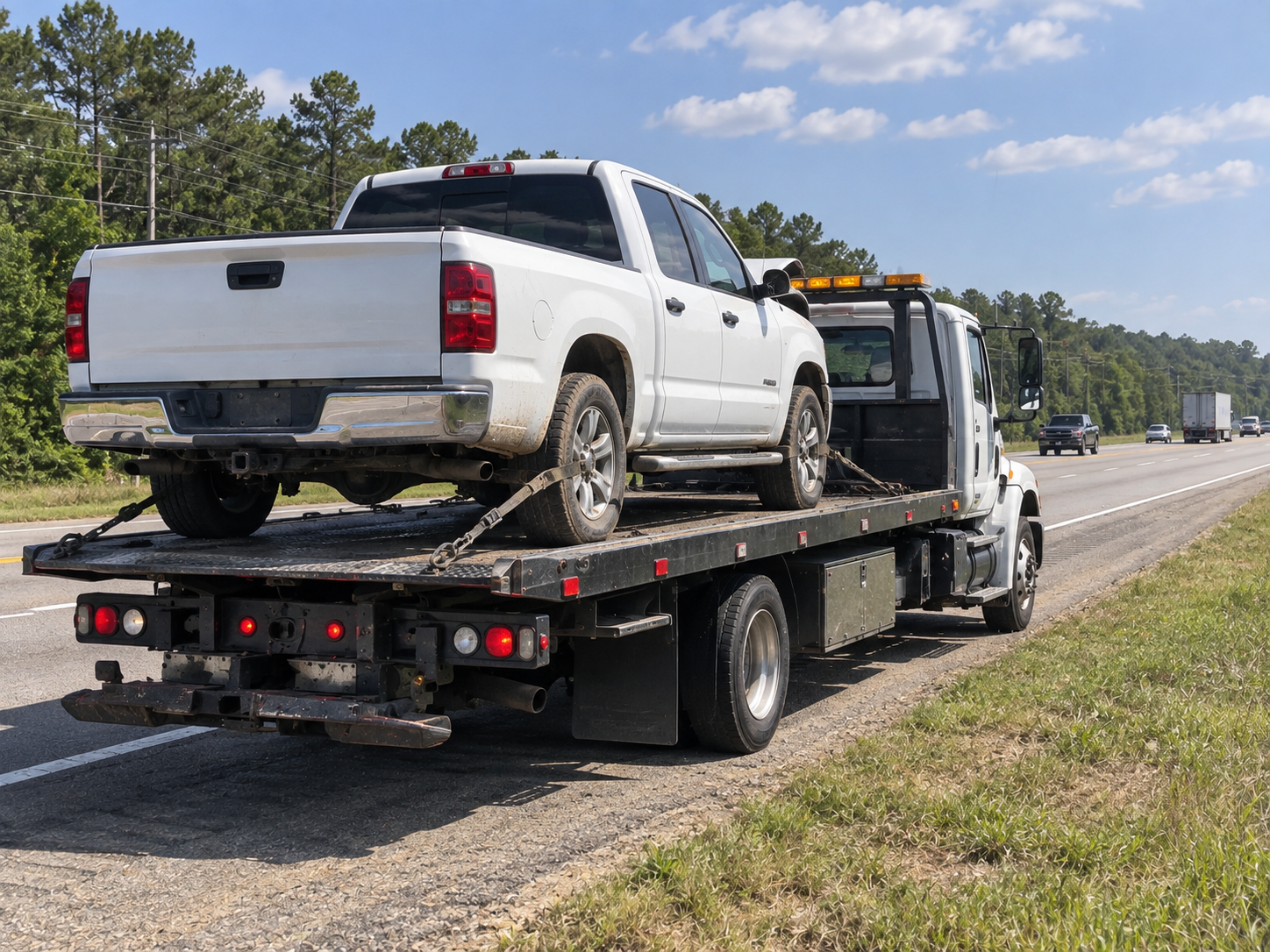
Recovering Vehicles That Cannot Be Moved Normally
Some vehicles require more than a routine tow before they can be transported. Severe collision damage, broken suspension parts, bent wheels, or a vehicle resting at an unusual angle can all make recovery more complicated than simply pulling it onto a truck.
Beaumont Towing looks at the vehicle’s condition, position, and accessibility before deciding how it should be moved. A car stopped along a narrow shoulder, sitting partly off the roadway, or unable to roll on its own wheels may need winching or flatbed loading instead of a conventional tow.
If the vehicle is no longer repairable, it may need to be transported to a storage yard, salvage facility, or another designated location. The priority is to recover it without creating additional damage or unnecessary risk during loading.
When you call, describe anything that may affect recovery, including damaged wheels, suspension problems, leaking fluids, or where the vehicle is positioned. Those details help determine what type of equipment may be needed before arrival.
What Happens After a Collision?
A vehicle can sometimes start after an accident and still be unsafe to drive. Damage to the steering, suspension, wheels, cooling system, or body can make the vehicle difficult or dangerous to operate even when the problem is not obvious at first glance.
If there is any doubt about the vehicle’s condition, towing it allows it to be inspected before more damage occurs. Beaumont Towing can transport accident-damaged vehicles to a body shop, repair facility, storage lot, residence, or another requested destination.
Before pickup, it helps to mention visible problems such as:
- Bent or damaged wheels
- Tires that will not hold air
- Fluid leaks
- Deployed airbags
- Steering or suspension damage
- Body panels contacting the tires
- A vehicle that cannot roll or steer normally
That information helps determine whether flatbed towing, winching, or another recovery method is appropriate.
If the collision happened along I-10, SR-60, SR-79, or another busy Beaumont roadway, personal safety comes first. Follow the instructions of police or emergency personnel at the scene and avoid driving a vehicle that no longer feels or operates normally.
When Your Vehicle Can’t Move Under Its Own Power
Some vehicles cannot be loaded like a routine breakdown. A damaged wheel, failed suspension component, steering problem, seized drivetrain, or serious mechanical failure can leave a car unable to roll, steer, or drive normally.
In those cases, flatbed towing may provide a more controlled way to move the vehicle. Instead of relying on the vehicle to drive or roll onto the truck, it can be winched onto the bed and transported with all four wheels off the roadway. This is often helpful after a collision or when mechanical damage affects the wheels, steering, or suspension.
Before loading begins, we look at anything that could complicate the process. Locked wheels, low ground clearance, leaking fluids, loose body panels, or damage underneath the vehicle can all change how it should be positioned and secured.
The goal is to avoid putting additional stress on already-damaged parts. Once the vehicle is safely loaded and tied down, it can be transported to a repair shop, dealership, body shop, residence, storage facility, or another destination you choose.
If your vehicle cannot move normally after a breakdown or collision in Beaumont, let us know what happened and what condition the vehicle is in. Those details help determine whether winching, flatbed towing, or another recovery method is the best fit before the truck arrives.
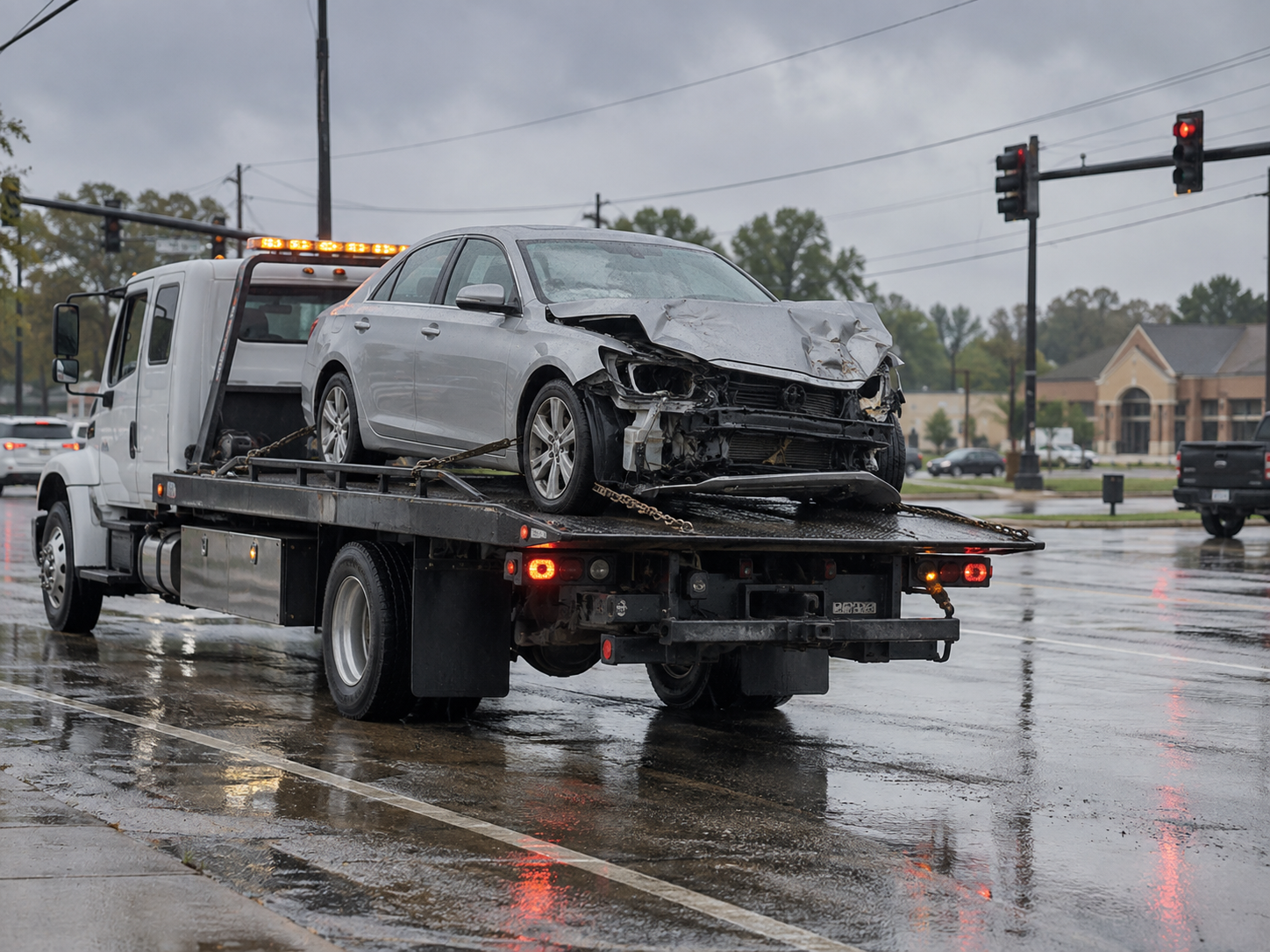
How Damaged Vehicles Are Loaded for Transport
A damaged vehicle often needs more preparation than a routine tow. Bent wheels, broken suspension parts, low ground clearance, loose body panels, or steering damage can all affect how the vehicle should be moved onto the truck.
Before loading begins, we look at how the vehicle is sitting, whether the wheels can roll, and whether anything underneath or around the car could interfere with recovery. Some vehicles can be positioned normally, while others may need to be winched onto a flatbed to avoid putting additional stress on damaged components.
Once the vehicle is on the bed, it is secured at appropriate tie-down points and checked before transport begins. Proper positioning matters because the vehicle needs to remain stable during braking, turns, and changes in road grade throughout the trip.
For accident-damaged or non-running vehicles in Beaumont, the goal is to move the vehicle with as little unnecessary movement as possible and avoid making existing damage worse during recovery.
Know What to Expect Before the Vehicle Moves
A tow is easier to manage when you understand what is happening and why. Before pickup, we gather information about the vehicle, what caused it to become disabled, where it is located, and where you want it transported.
Those details help determine whether flatbed towing, winching, or another recovery method is appropriate. A vehicle with a broken wheel, damaged steering, or collision damage near I-10 may require a very different setup from a non-running car sitting in a Beaumont parking lot.
We also explain what will happen before the vehicle is loaded so you are not left guessing about the process. Clear information helps reduce delays, makes it easier to send the correct equipment, and keeps the pickup and delivery process more predictable.
Need Flatbed Towing or Vehicle Recovery in Beaumont?
If your vehicle cannot be driven safely, Beaumont Towing can help determine the most appropriate way to move it. Flatbed towing is commonly used for accident-damaged vehicles, low-clearance cars, many AWD and 4WD vehicles, and vehicles with damaged wheels, suspension, or steering components.
The recovery method depends on the vehicle’s condition, where it is stopped, and how easily it can be accessed. A car disabled along I-10 or SR-60 may require a different approach from one that simply will not start in a driveway or parking lot.
When you call, provide your location, vehicle information, visible damage, and intended destination. Those details help us determine what equipment and loading method make the most sense before the truck arrives.