Emergency Towing in Beaumont, California
Emergency Tow Service for Disabled Vehicles in Beaumont, CA
A vehicle does not have to be completely broken down before it becomes unsafe to drive. Overheating, steering problems, collision damage, warning lights, fluid loss, or a tire failure can all be reasons to stop and arrange a tow. Beaumont Towing provides emergency towing throughout Beaumont and the surrounding Pass Area for vehicles that cannot be driven safely to their next destination.
Situations that commonly lead to an emergency tow include:
- Vehicles that will not start
- Overheating or cooling-system problems
- Flat tires or damaged wheels
- Collision damage
- Steering or suspension problems
- Engine or transmission trouble
- Significant fluid leaks
- Electrical or charging-system failures
Where the vehicle stops can also affect what happens next. A breakdown in a parking lot may allow plenty of room to inspect and load the vehicle, while a disabled car along I-10, SR-60, SR-79, or another high-traffic road may need to be moved away from traffic as quickly as conditions safely allow. If you are stopped in an exposed location, move yourself and any passengers to a safer area when possible and contact emergency services when there are injuries, fire, leaking hazardous fluids, or an immediate danger to traffic.
It is also possible to need emergency towing when the engine still runs. Continuing to drive with severe overheating, damaged steering, unusual grinding, a leaking cooling system, or accident damage can turn a manageable repair into a larger problem. When there is doubt about whether the vehicle is safe to operate, transporting it to a repair shop or other destination can be the safer choice.
Signs It’s Safer to Tow the Vehicle
A vehicle should be towed when continuing to drive could make the damage worse or create a safety problem. Some warning signs are more serious than others, especially when they appear together.
Common reasons to stop driving and arrange towing include:
- Smoke, steam, or a strong burning odor
- A major fluid leak beneath the vehicle
- Grinding, knocking, or severe vibration
- Loss of normal steering or braking
- A visibly damaged tire or wheel
- Collision damage involving the suspension, body, or wheels
- Engine overheating
- Several warning lights combined with poor vehicle performance
- A vehicle that starts but will not move or drive normally
A dashboard warning light by itself does not always mean the car needs to be towed. The bigger concern is when a warning light is combined with symptoms such as smoke, leaking fluids, unusual sounds, overheating, or a noticeable change in how the vehicle handles. In those situations, continuing to drive may turn a smaller problem into a more expensive repair.
What to Expect During an Emergency Tow
The towing method should be chosen based on the vehicle’s condition, not simply because a tow truck is available. A routine mechanical breakdown may be handled differently from an AWD vehicle, a low-clearance car, or a vehicle with damaged wheels or suspension. When keeping all four wheels off the roadway is important, flatbed towing may be the more appropriate option.
Before transport, the vehicle is positioned and secured based on how it can safely be moved. Once it is loaded, it can be taken to a repair shop, dealership, body shop, residence, storage facility, or another requested destination. The objective is to move the vehicle without causing additional damage and give the driver a clear next step after the breakdown.

When a Breakdown Calls for a Tow
Some mechanical problems are minor enough to handle roadside, while others make it a bad idea to keep driving. In Beaumont, that can mean a vehicle overheating near I-10, losing power along SR-60, or developing steering or transmission trouble on a local road such as Beaumont Avenue. Electrical failures, damaged belts or hoses, fluid loss, and drivetrain problems can also leave a vehicle unsafe to operate.
Beaumont Towing can move vehicles that should not continue under their own power. The appropriate towing method depends on more than the type of breakdown. Drivetrain, ride height, wheel condition, steering, and accessibility all matter when deciding how the vehicle should be loaded. A routine mechanical failure may allow a conventional tow, while an AWD vehicle, low-clearance car, or vehicle with damaged wheels may be better transported on a flatbed.
What to Tell Us When You Call
A few accurate details can help determine what equipment should be sent before the tow truck reaches you. That can make the pickup more efficient and reduce the chance that different equipment has to be brought out later.
Helpful information includes:
- Where the vehicle is located, including a nearby exit, intersection, or landmark
- The vehicle’s year, make, and model
- Whether the engine starts and whether the vehicle can roll or steer
- Any visible damage, leaking fluids, warning lights, smoke, or unusual sounds
- Whether the vehicle is AWD, 4WD, front-wheel drive, or rear-wheel drive if you know
- Where you want the vehicle delivered
You do not need to diagnose the problem yourself. Simply describing what happened and what the vehicle is doing now can provide useful information. The clearer the situation is before arrival, the easier it is to choose the proper towing setup and prepare for conditions at the pickup location.
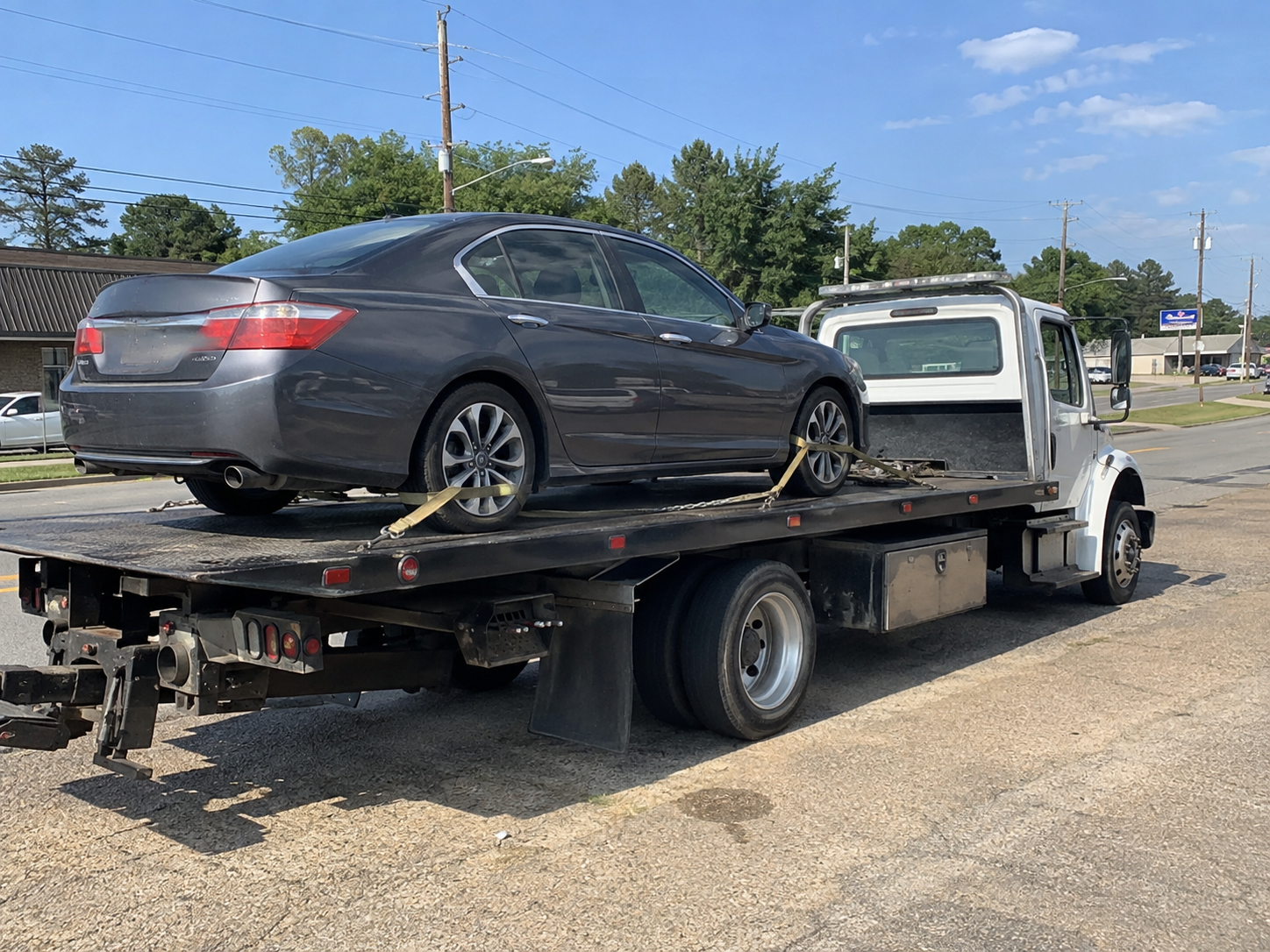
Accident Towing and Collision Recovery
A vehicle may still start after a crash and yet be unsafe to drive. Impact damage can affect the steering, suspension, wheels, cooling system, alignment, and other components that are not always obvious from a quick look. Beaumont Towing can recover accident-damaged vehicles and move them from the scene to a body shop, repair facility, storage yard, residence, or another requested destination.
How the vehicle is transported depends on the damage. If a wheel is bent, the suspension has shifted, or the vehicle cannot roll or steer normally, a flatbed may be the better choice. Keeping all four wheels off the roadway can provide more control during transport and avoid placing additional stress on damaged parts.
After a collision, personal safety comes first. Move away from active traffic when it is safe to do so and follow directions from police, fire, or other emergency personnel at the scene. A vehicle that is leaking fluid, smoking, sitting unevenly, or having trouble steering or braking should not be driven simply because the engine still runs.
Once the scene is cleared for removal, we determine what equipment is appropriate, load and secure the vehicle, and transport it to the destination you choose.
When a Roadside Fix Is No Longer the Right Option
Some roadside problems can be solved without towing the vehicle. A discharged battery may respond to a jump-start, a flat tire may be changed with a usable spare, and running out of gas can often be handled with fuel delivery. The situation changes when the vehicle still cannot be driven safely afterward.
A damaged wheel, missing spare, or unsafe shoulder along I-10 or SR-60 may make a tire change impractical. Likewise, a vehicle that will not restart after a jump may have an alternator, starter, battery, or electrical problem that requires diagnosis. If fuel is added and the engine still will not start, the issue is probably more than an empty tank.
The important question is not just whether the vehicle can move. It is whether it can complete the trip without putting the driver at risk or causing additional mechanical damage. Overheating, fluid leaks, grinding sounds, steering problems, severe vibration, or collision damage are all good reasons to stop driving.
When roadside assistance cannot safely solve the problem, Beaumont Towing can transport the vehicle to a repair shop, dealership, residence, or another requested location. That can be especially important on heavily traveled Beaumont routes where remaining stopped near traffic for too long can create another problem on top of the original breakdown.
Choosing the Safest Towing Method for Your Vehicle
Not every disabled vehicle should be moved the same way. Before a tow begins, the vehicle’s condition, drivetrain, ride height, wheel position, steering, and location all need to be considered. A low-clearance car, AWD vehicle, or car with suspension damage may need a different setup than a vehicle that simply will not start.
We also look at whether the vehicle can roll freely, whether any wheels are locked or damaged, and whether loading it onto a flatbed would provide better control. Those details matter in Beaumont, especially when a vehicle is stopped along I-10, SR-60, or another heavily traveled road where loading space and traffic conditions can affect the recovery.
Once the towing method is selected, the vehicle is positioned, secured, and checked before transport. From there, it can be taken to a repair shop, dealership, body shop, residence, storage facility, or another destination you request.
The goal is not to use the same equipment for every call. It is to match the towing approach to the vehicle and the situation so the car can be moved safely without creating additional damage during pickup or transport.
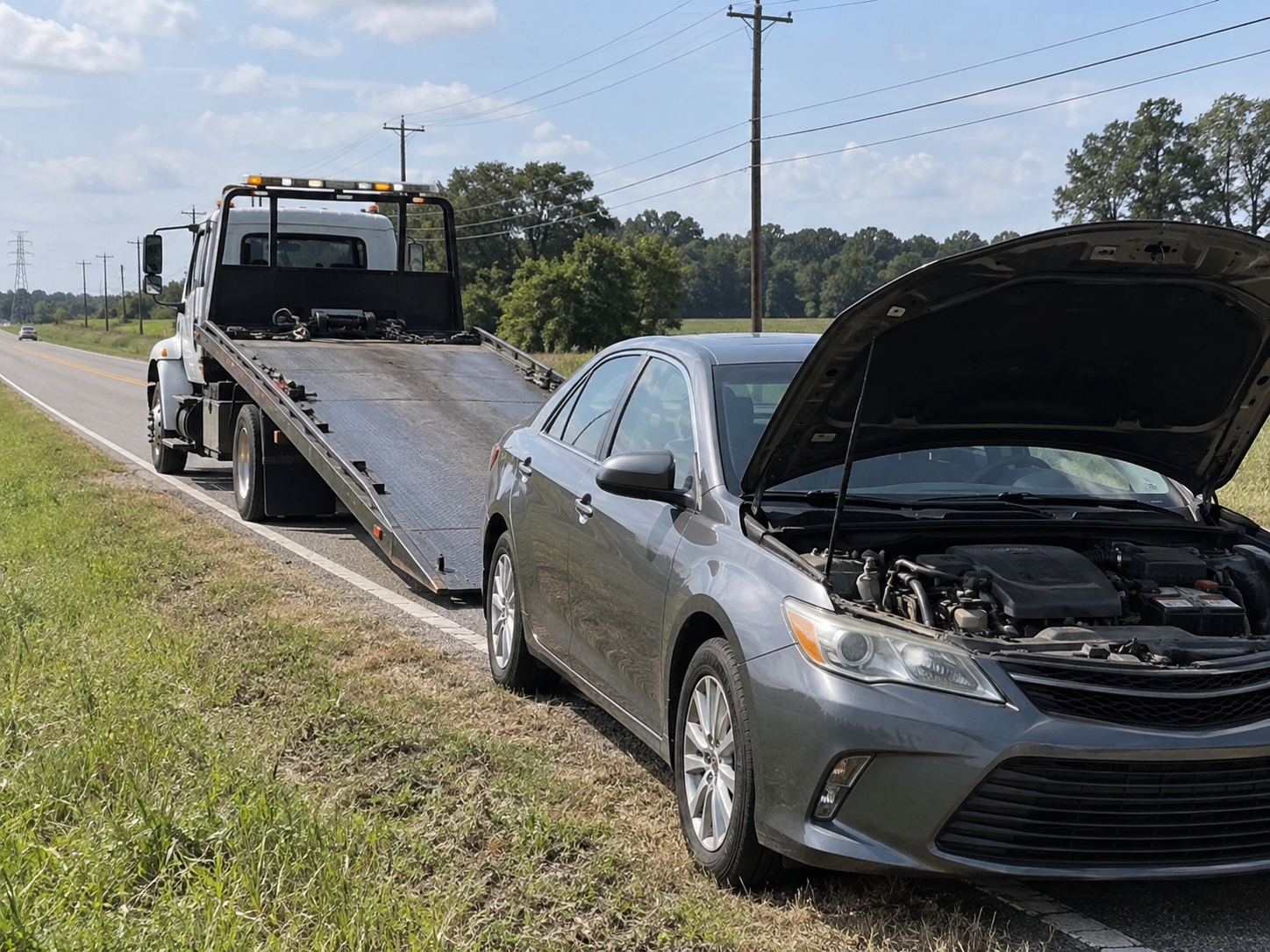
What to Expect When You Call for Emergency Towing
The fastest way to get the right help is to give a clear picture of what is happening before the truck is dispatched. When you call, be ready to share your location, the year, make, and model of the vehicle, what caused it to stop, and where you want it taken.
If you are stranded along I-10, SR-60, SR-79, or another busy road around Beaumont, a nearby exit, intersection, business, or landmark can make your location easier to identify. It is also helpful to mention whether the vehicle is on a shoulder, in a parking lot, in a tight-access area, or somewhere that may make loading more difficult.
For accident-damaged vehicles, details about wheel damage, leaking fluids, steering problems, deployed airbags, or body panels rubbing against the tires can affect how the vehicle should be recovered. That information helps determine whether flatbed towing, winching, or another recovery method may be needed.
Once the situation and destination are clear, the vehicle can be loaded, secured, and transported using the equipment that fits the job. Good information up front helps reduce delays and makes the pickup process more straightforward.
How to Choose the Right Towing Service
A towing company should do more than simply move the vehicle from one place to another. The vehicle’s drivetrain, clearance, wheel condition, accessibility, and damage all affect how it should be handled.
That matters in Beaumont because towing conditions can vary significantly. A disabled car near Oak Valley Parkway may be very different from an accident-damaged SUV along I-10 or an AWD vehicle stopped near the SR-60 connection. The correct towing method depends on the vehicle itself and the conditions at the pickup location.
Beaumont Towing focuses on matching the equipment to the situation, securing the vehicle correctly, and explaining what happens next. If roadside assistance can safely solve the problem, towing may not be necessary. If the vehicle cannot be driven without risking additional damage, we can transport it to the repair shop, dealership, residence, storage facility, or other destination you choose.
Need Emergency Towing in Beaumont?
A breakdown or collision can stop your trip without warning, but deciding what to do next should be simple. If your vehicle cannot be driven safely because of mechanical failure, accident damage, a damaged wheel, overheating, or another serious problem, Beaumont Towing can help get it off the road and transported where it needs to go.
Emergency towing is available throughout Beaumont and nearby communities, including calls along I-10, SR-60, SR-79, local streets, residential neighborhoods, and commercial areas. When you call, tell us where the vehicle is located, what happened, and where you want it taken. From there, we can determine the appropriate towing method and help arrange safe transport.